How One 3D Printer Manufacturer Used SMARC Computer-On-Modules to Unlock Industrial 3D Printing
July 15, 2026
Blog
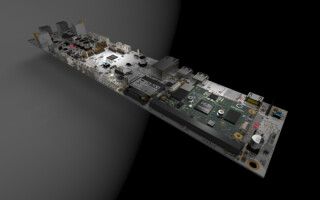
UltiMaker scaled an entire 3D printing product portfolio to support the performance demands of advanced motion control software thanks to the modular, flexible and upgradable SMARC Computer-on-Module (COM) architecture.
Products from 3D printers are becoming increasingly important in industry, as spare parts are often no longer available or are too expensive or to expensive to stock. An alternative is spare parts from 3D printers. However, these must deliver consistently high quality to be used in industrial series production. Professional users therefore have a non-negotiable set of demands: uncompromising reliability, consistent repeatability, safe material handling, reliable and secure software coupled with excellent support, and an intuitive user experience that allows them to stay focused on their design goals. Therefore, industrial 3D printers must work quickly, achieve high throughput, and consistently maintain the required quality.
Most of all, they require acquisition and operating costs that are low enough to justify the investment.
Since its founding in 2011, UltiMaker has evolved from desktop systems to become a globally recognized leader in professional and industrial 3D printing. With around 150,000 printers in the field, UltiMaker serves a broad range of markets, including industrial manufacturing, research and development, maintenance, and healthcare.
To further improve print quality and maintain precision at high speeds, UltiMaker developed Cheetah, a motion planning software that determines the optimal movement path for a 3D printer’s print head and material feeder based on various input parameters. Cheetah dictates how the print head slows down before a corner and adjusts material extrusion to precisely match these movements, resulting in a notable reduction in the vibration artifacts of 3D-printed objects.
While advanced motion planning sets a new benchmark for what 3D printers can achieve, it requires computing capabilities far beyond what control platforms commonly used in the industry today can achieve. Specifically, Cheetah demands embedded hardware that can:
- Deliver advanced computing power to support real-time motion control
- Integrate real-time sensors for dynamic feedback and process adjustment
- Interface with high-resolution encoders or feedback systems, particularly for optional closed-loop control architectures
Evolving 3D Printers with Open-Standard Computing for Advanced Motion Planning
To overcome these challenges, UltiMaker adopted the open-standard Smart Mobility ARChitecture (SMARC) computer-on-module (COM) architecture when building its latest products — the Factor 4, S6, and S8 printers (Figure 1). Setting a new bar in performance for 3D printing, these machines are equipped with the Cheetah motion planning software to deliver faster, higher-accuracy operation than their predecessors. Repeatable precision to within ±0.2 mm enables better print quality in less time across small-series productions, rapid prototyping, and spare parts manufacturing to support the evolving needs of industrial users.
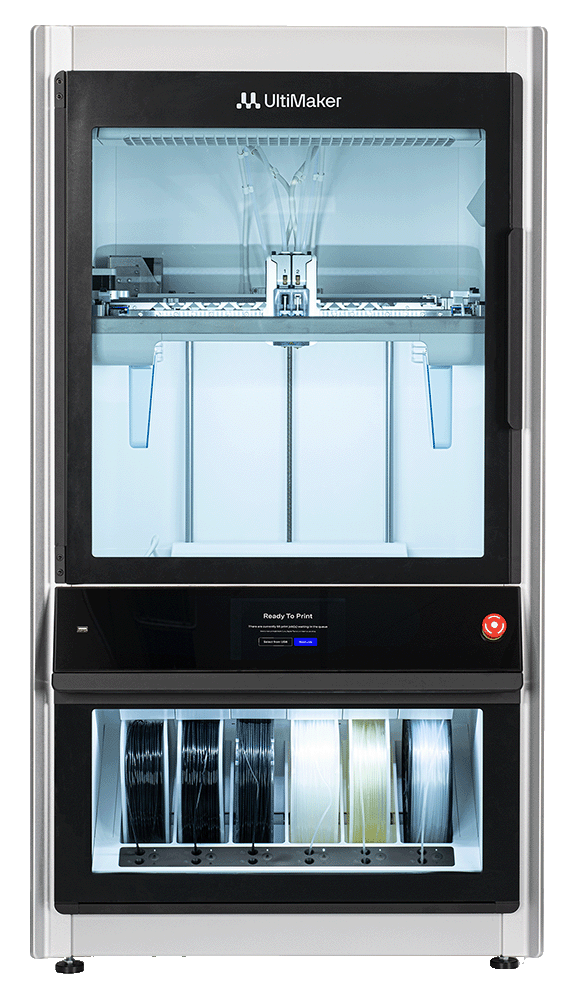
Figure 1. The UltiMaker Factor 4 industrial-grade 3D printer offers high-precision, streamlined production through the integrated Cheetah motion planner software. (Image: UltiMaker)
The newest UltiMaker product family also features:
- Expanded material support (including high-temperature engineering plastics)
- Responsive, high-resolution touchscreen user interfaces
- Modular design for deployment in secure environments
- Protections against dust, temperature, and particle emissions
- Build volume temperature control (Factor 4)
SMARC offers the standardized embedded computing platforms that streamlined the development of these products. COMs built to the SMARC open standard provide high scalability, long lifecycles, engineering flexibility, and robust firmware support, making them well suited for the high demands of professional markets such as automation, medical, transportation — and now, additive manufacturing (Table 1).
|
Capability |
SMARC value add |
What this means for UltiMaker |
|
Flexibility |
SMARC’s two-board COM architecture separates the processor module from an application-specific I/O carrier board. Users can purchase a standards-based module off-the-shelf and focus technical resources on adding value through application software, peripherals, or mechanical integration. |
SMARC allows UltiMaker to define interfaces for a variety of peripherals on a custom carrier board optimized for one or more offerings in a 3D printer product family. The company can then differentiate across a product portfolio by supporting different combinations of peripherals and SMARC compute modules. |
|
Scalability |
With support for both Arm and x86 SoCs, congatec SMARC modules address a range of low-power and high-performance use cases. This simplifies scalability as platform requirements grow — potentially even on the same carrier board design. |
UltiMaker can leverage SMARC to create a low-power controller for a value line of 3D printers, then build out a full portfolio based on increasingly powerful multicore processor modules — without having to redesign the entire system architecture. |
|
Faster time-to-market |
Standardized SMARC form factors and off-the-shelf modules reduce design complexity and accelerate design-ins, speeding time-to-market for new products. Future systems based on the same module and carrier board can potentially benefit from streamlined testing, QA, and compliance cycles when seeking recertification or requalification to industry regulations. |
UltiMaker purchases off-the-shelf SMARC modules that eliminate the engineering cycles required to design, manufacture, and test high-speed digital compute subsystems. The modules are part of a common compute and control architecture that accelerates validation and time-to-market across the UltiMaker Factor 4, S6, and S8 product families. |
|
Long-lifecycle support |
SMARC designs can be extended or upgraded by adding next-generation compute modules to compatible current- or previous-generation carrier boards. This can extend the lifecycle of individual devices, fleets, or entire product families. |
The modular SMARC architecture promotes design reuse and simplifies Bill-of-Materials (BOM) management across UltiMaker product families. This makes lifecycle management more predictable at every stage, from design and development to repair and maintenance, product upgrade, or replacement. |
|
Robust firmware & update mechanisms |
congatec SMARC modules ship with a robust embedded BIOS supporting Trusted Platform Modules (TPMs), Secure Boot, and system utilities like firmware update modules and board controller management tools. When integrated with an OEM firmware model, the BIOS simplifies security, remote management, and control of device firmware and edge application software. |
The built-in capabilities of congatec’s embedded BIOS make remote feature upgrades, bug fixes, and security patches straightforward, safer, and more manageable on UltiMaker 3D printers deployed in the field. |
Table 1. The Smart Mobility ARChitecture (SMARC) delivers several design advantages for manufacturers of 3D printers.
By migrating to the SMARC COM architecture, UltiMaker was able to increase platform performance, integrate fast, responsive user interfaces, and add headroom for future feature additions or upgrades.
Perhaps more importantly, the company gained a future-ready control infrastructure capable of supporting its evolving 3D printer product roadmap.
Bringing Next-Generation Performance to Life Across Scalable Product Portfolios
At the heart of UltiMaker’s Factor 4, S6, and S8 printers is the congatec conga-SMX8-Mini SMARC module, which serves as the core compute platform for all three models (Figure 2). Based on the NXP i.MX 8M Mini application processor, the conga-SMX8-Mini provides the multicore processing required to run Cheetah’s motion profiles, a responsive UI, and high-speed data processing in parallel. It supports Linux operating systems and features integrated high-speed interfaces like Gigabit Ethernet, a broad range of I/O, and display connections.
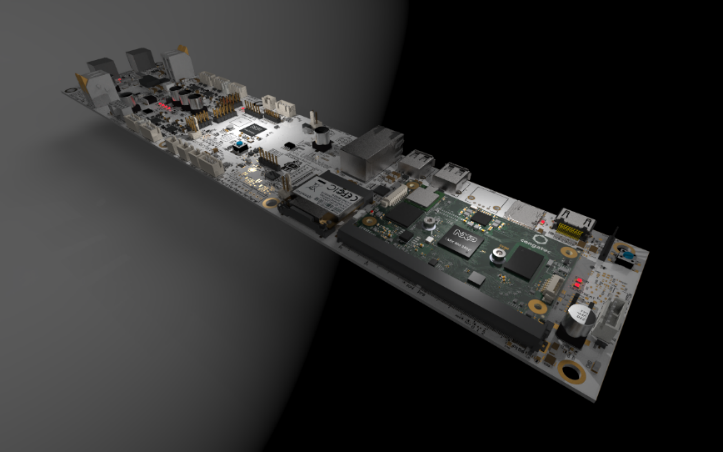
Figure 2. The congatec SMARC module conga-SMX8-Mini serves as the central computing platform for the UltiMaker Factor 4, S6, and S8 industrial printers. (Image: UltiMaker)
To meet real-time control requirements, UltiMaker pairs the SMARC module with a dedicated NXP i.MX RT1064 microcontroller, which is located on each system’s carrier board. This MCU handles deterministic control tasks such as motion actuation and thermal regulation, operating independently of the Linux-based application processor.
Thanks to its standardized modular design, the conga-SMX8-Mini SMARC module simplifies upgrades and enables different platform variants and product lines. The Factor 4, S6, and S8 printers are all built on a common architecture with a single shared carrier board design, enabling consistent performance, rapid design iterations, shorter time-to-market, and broad scalability throughout the portfolio.
Additionally, SMARC’s open architecture avoids vendor lock-in to ensure long-term support through easy module replacement, whether to extend model lifetime or support warranty and repair commitments to users.
Conclusion
Professional 3D printers must meet demanding requirements for performance, reliability, and scalability. To support these needs, platforms based on open standards like SMARC offer a modular, future-oriented foundation that simplifies product development and long-term support.
By adopting a scalable embedded hardware architecture, UltiMaker demonstrated how advanced motion planning, new 3D printing technologies, and embedded computing expertise can come together to accelerate time-to-market while raising the bar for product quality and system performance.